InfoComm Technology
Discover how NBPS equips students with digital skills, from media literacy to coding. Learn about our programmes that build responsible, future-ready digital learners.
Infocomm Technology
Goal
Nurture future-ready and responsible digital learners
Key Objectives
Integrate the use of technology in teaching and learning
Deepen digital learning in new media literacy
Develop digital citizenship
Provide opportunities for students to innovate and co-create with technology
Intergration of technology in curriculum
In NBPS, teaching and learning with technology is hinged by the Student Learning Space (SLS) Pedagogical Scaffold that guides teachers in the design of meaningful ICT-enabled student-centric learning experiences. Emerging technologies are also harnessed to create meaningful learning experiences that bridge students’ acquisition of content knowledge and the development of digital literacy skills and 21st century competency skills.
These collective experiences aim to develop Navalites' confidence in expressing their understanding and thoughts during their learning process. By collaborating and contributing actively to the learning process, Navalites can hone their critical thinking skills to deepen their learning. The use of SLS also empowers Navalites to assume greater ownership of their learning as they explore quality curriculum-aligned resources for self-paced learning.
Digital literacy and fluency are imperative for Navalites to thrive in an increasingly digital landscape. In NBPS, students undergo designed ICT baseline lessons to acquire the skills to curate information, connect in the digital space and co-create with technology.
At NBPS, every learner matters. We work actively with eligible households to acquire their own Internet-enabled computing devices through DigitalAccess@Home. Please click here (opens in new tab) to find out more or approach our General Office for further assistance.
Opportunities for developing digital literacy of future-ready learners
InnoChange Maker Programme
Primary 3 and Primary 4 Navalites are challenged to exercise their critical and inventive thinking skills to propose innovative solutions to real world problems for this programme. With information easily accessible at their fingertips, Navalites are given the opportunities to access infinite knowledge, apply them to real world problems and to realise the impact they can make through their innovations. In the process, Navalites apply their new media literacy skills to curate, connect and create digital artefacts.
Code For Fun (CFF)
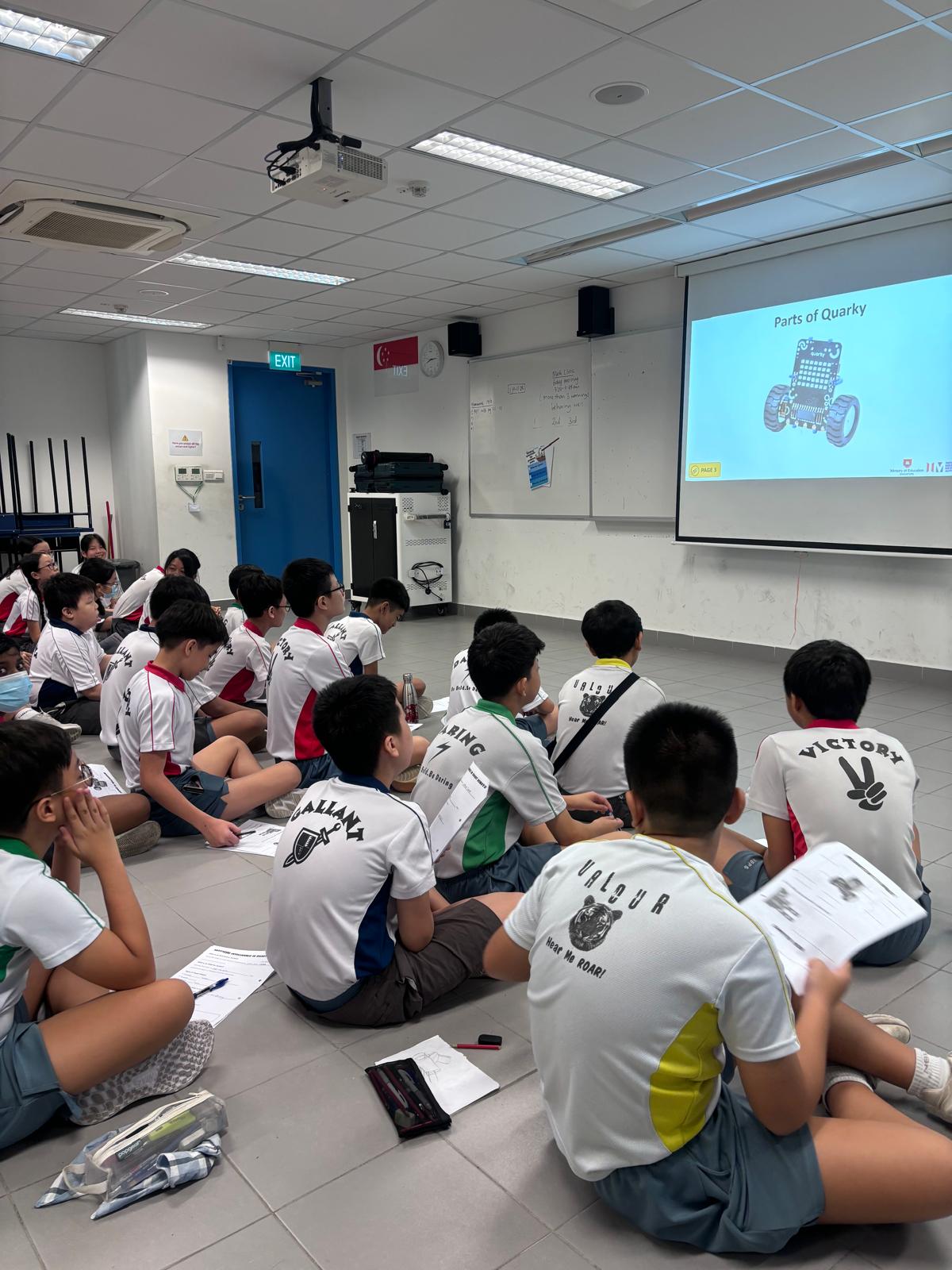
Primary 5 Navalites undergo an extensive 10-hours CFF Programme to learn more about computational thinking, programming and artificial intelligence. Besides learning to use a block-based programming to write a code for the Sphero Bot to complete specific challenges, they also learn about the applications of artificial intelligence to improve the quality of life.
.jpeg)
Supporting our Lower Primary Students
Our lower primary students learn basic device operations and, with guidance from their teachers, practise logging in to and navigating the Singapore Student Learning Space (SLS). These early experiences build their confidence and foundational digital literacy skills, preparing them for more independent learning with technology. This supports MOE’s EdTech Masterplan 2030 (opens in new tab), which emphasises equipping students with digital literacy and technological skills for the future.